Spanish National Police Inspector physical tests: pass first time without stealing hours from the syllabus
They are the first test of the Inspector exam and count as a pass or fail: an average of 5 and no zeros. The plan gets you through them with a margin on three or four days a week, with sessions that fit the time your studying leaves.
Updated
What are the Executive Scale physical tests?
The Executive Scale of Spain's National Police, the Inspector rank, has the same three physical tests as the Basic Scale and in the same order: agility circuit, bar (pull-ups for men, flexed-arm hang for women) and 1,000 metres. They are published in the Resolution of 7 July 2026 (BOE no. 167), annex I, with the same 0 to 10 table per test.
The difference is in how they count. On the Executive Scale the physical tests are pass or fail: you need an average of 5 and no zeros, but the score is not added to the knowledge exam. And they are the first test of the process: they come before the other exercises, so they arrive when you are putting the most hours into the syllabus.
That changes the goal. It is not about scraping points, but about arriving with a margin in all three so that a bad day doesn't knock you out before you start. The reference marks are those of the table:
- Circuit: a 5 is 10.5 s for men and 11.6 s for women; at 11.7 s or more (men) or 12.8 s or more (women) it is a 0.
- Pull-ups: 10 reps are a 5; fewer than 5 is a 0.
- Flexed-arm hang: 57 seconds are a 5; under 36, a 0.
- 1,000 m: a 5 is 3:24 for men and 4:09 for women.
Since it is an average, a 4 in the bar is offset by a 6 in the circuit; what can't be offset is a 0. The board's rules are those of the Basic Scale: one circuit attempt (a second only if the first is void), pull-ups from straight arms with no kipping, the hang with the chin above the bar, and no gloves or chalk.
The tests for National Police · Executive Scale
Same 0-10 scale as the Basic Scale, but it counts as pass or fail: an average of 5 and no zeros. It does not add to the final score.
Order: Circuit, bar and 1,000 m, in that order. It is the first test of the process.
| Test | Men · 5 points | Men · 10 points | Women · 5 points | Women · 10 points |
|---|---|---|---|---|
| Agility circuit | 10.5 s | 8.2 s | 11.6 s | 9.3 s |
| Pull-ups (M) / Flexed-arm hang (W) | 10 | 17 | 57 s | 95 s |
| 1,000 m run | 3:24 | 2:54 | 4:09 | 3:24 |
Agility circuit
Attempts: One attempt; a second one only if the first is void.
- Standing start behind the line, to the right or left of the hurdle.
- Time stops when you land after your whole body has cleared the last hurdle.
- Void if you change the route shown in the diagram.
- Void if you knock over or lean on a hurdle or post, or grab one on purpose.
Pull-ups
Attempts: One attempt.
- Overhand grip (palms forward), slightly wider than the shoulders.
- Every rep starts from fully straight arms with a still body.
- The chin clearly passes the bar, which ends at the lower third of the neck.
- A small pause between reps: no bouncing.
Flexed-arm hang
Attempts: One attempt.
- Underhand grip (palms towards you), arms bent and chin above the bar.
- Body straight and still: no hip flexion, no swinging.
- Head in a normal position: it may not be tilted back.
- It ends when the chin drops to the bar, below it, or touches it.
1,000 m run
Attempts: One attempt, in a group.
- In a group, on a smooth, flat, hard surface.
- Sports shoes, no spikes.
- Leaving the running area or unsporting behaviour eliminates you.
What else they ask for
- Medical certificate on the Medical Associations' form, handed in on test day.
- Random doping controls are possible, as in the Basic Scale.
Source
Resolution of 7 July 2026 of the Police Directorate-General (BOE no. 167, 10 July), annex I.
BOE-A-2026-15054Rules checked on 2026-09-23.
The full scoring table
Each test scores 0 to 10. A mark between two rows takes the lower score; below the 1-point mark it is a 0 and you are out.
| Points | Agility circuit Men | Pull-ups Men | 1,000 m run Men | Agility circuit Women | Flexed-arm hang Women | 1,000 m run Women |
|---|---|---|---|---|---|---|
| 10 | 8.2 s | 17 | 2:54 | 9.3 s | 95 s | 3:24 |
| 9 | 8.8 s | 16 | 3:00 | 9.8 s | 86 s | 3:33 |
| 8 | 9.3 s | 15 | 3:06 | 10.3 s | 78 s | 3:42 |
| 7 | 9.7 s | 14 | 3:12 | 10.8 s | 70 s | 3:51 |
| 6 | 10.1 s | 12 | 3:18 | 11.2 s | 63 s | 4:00 |
| 5 | 10.5 s | 10 | 3:24 | 11.6 s | 57 s | 4:09 |
| 4 | 10.9 s | 8 | 3:30 | 12.0 s | 52 s | 4:18 |
| 3 | 11.2 s | 7 | 3:36 | 12.3 s | 46 s | 4:27 |
| 2 | 11.4 s | 6 | 3:42 | 12.5 s | 41 s | 4:36 |
| 1 | 11.6 s | 5 | 3:48 | 12.7 s | 36 s | 4:45 |
Your AI-generated plan
You choose the National Police and the Executive Scale, your sex, the date and your marks. The app tells you straight away whether you would pass today, what your average is and which test is closest to a 0 or a 5, and orders the work around that.
Built for people who study: the plan works with three days a week and trims each session to the time you give it, removing whole blocks rather than rushing the rests. With three days, the week has one strength day with the exam bar, one circuit day and one interval day for the 1,000 m, and the bar comes back on the other two in small doses, which is how it improves fastest.
The phases count back from your exam: base to learn the tests, development with longer intervals and the full circuit, exam pace and a final taper week. Every five weeks, a mock test in the official order with 8-10 minutes between tests; you log your marks and see your average and whether you would pass.
The bar and the circuit, from your level: hangs and negatives if you can't do a pull-up, assisted and strict reps when you do fewer than five, volume from five and added weight from fifteen; and the circuit in parts, with the BOE diagram and a home version with two chairs and a broomstick.
From today to the exam, week by week
With the exam date, the plan counts backwards: base, development, exam pace and taper. Every five weeks, a deload with a mock test under the official protocol.
weeks to the exam
- Base
- Development
- Specific
- Taper
- Exam week
Mock test· Exam
- Base: learn the tests and build the engine. Easy runs and aerobic intervals, the circuit in parts, and bar or push-up progressions from your rung.
- Development: aerobic power and speed. Long intervals at 3K pace, the full circuit flat out and more reps to the board's standard.
- Specific: exam pace. Intervals at your target pace, the circuit under exam conditions and bar sets like the board's.
- Taper. Less volume, same intensity: arrive fresh without losing the edge.
- Exam week. Short activation, rest the day before and everything ready for test day.
Without an exam date, the plan moves through base, development and exam pace, with a mock test every five weeks, and reshuffles the phases as soon as you set the date.
Who is this plan for?
-
Inspector candidates who spend most of the day on the syllabus and need the physical tests to take no more than three or four hours a week.
-
Those who come from sport and are strong in one test but weak in another: a good runner who can't do pull-ups, or someone strong who gets stuck in the circuit. The plan puts the work where the risk of a 0 is.
-
Basic Scale officers going for promotion: you know the tests, but maybe you haven't timed them in years. The initial assessment tells you where you are today.
Work out your physical test score
Enter your marks the way the board would time them. Longer times in minutes and seconds (3:24).
Enter every mark to see the full score.
Calculated in your browser: nothing is stored.
How each test is done
The same drawings you see in the app, with the BOE measurements: the circuit route and what the board checks on every rep.
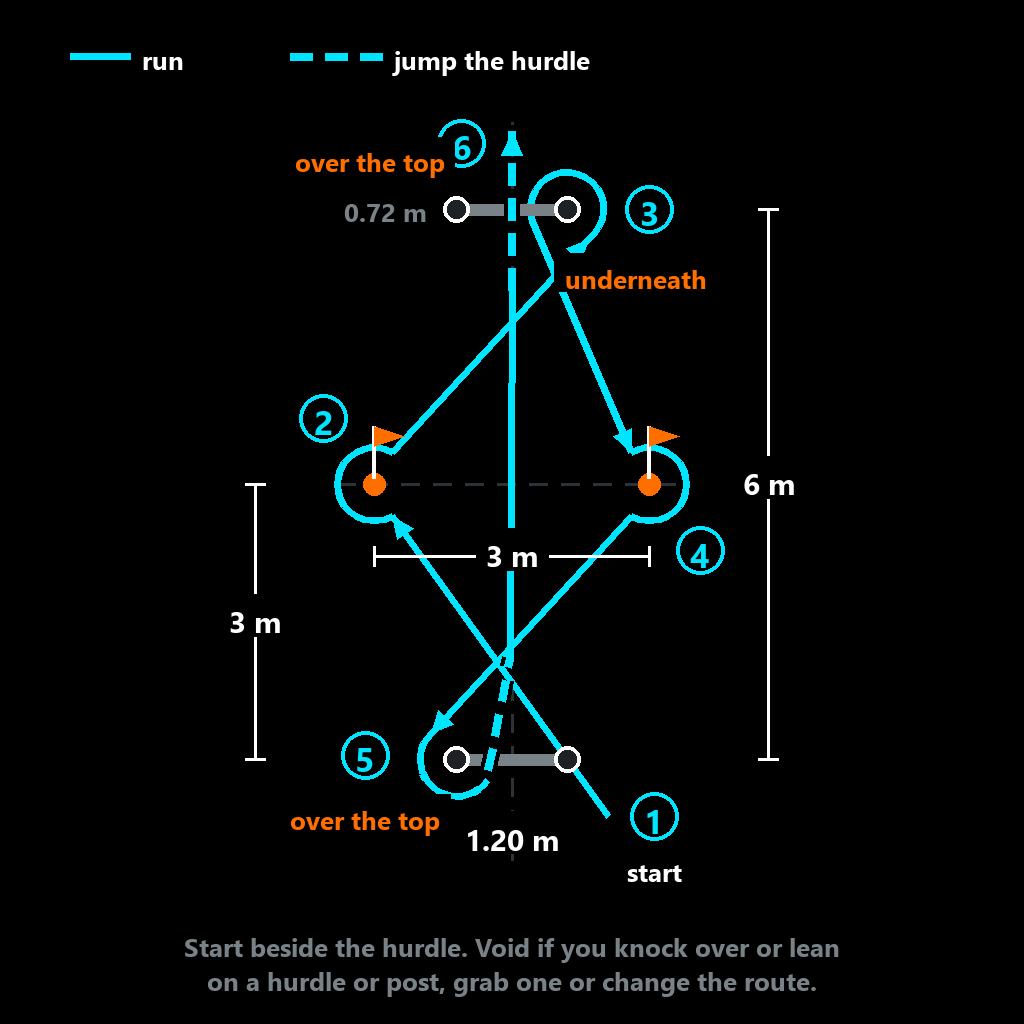
National Police agility circuit diagram: hurdles 6 m apart, posts 3 m apart, under and over the hurdles 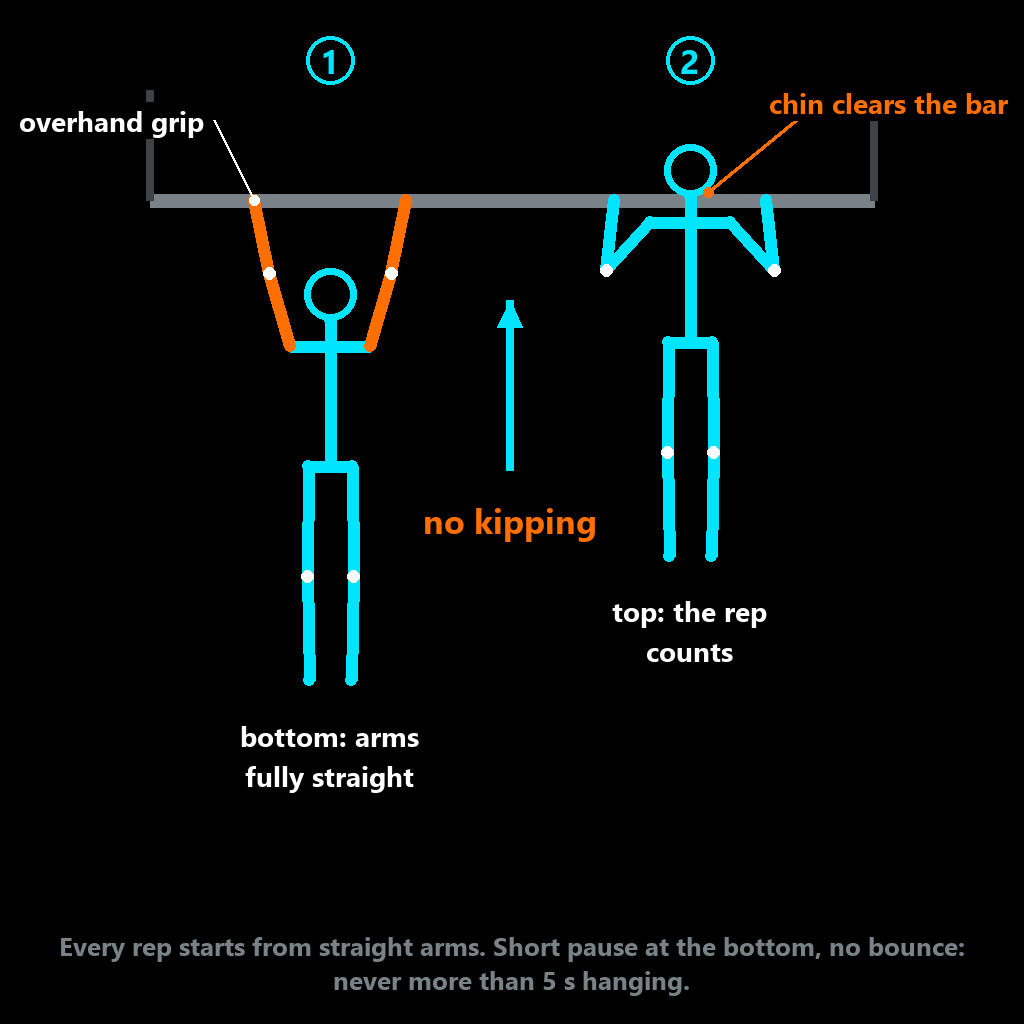
National Police exam pull-up: starts from a dead hang with straight arms and an overhand grip, and counts when the chin clears the bar, no kipping 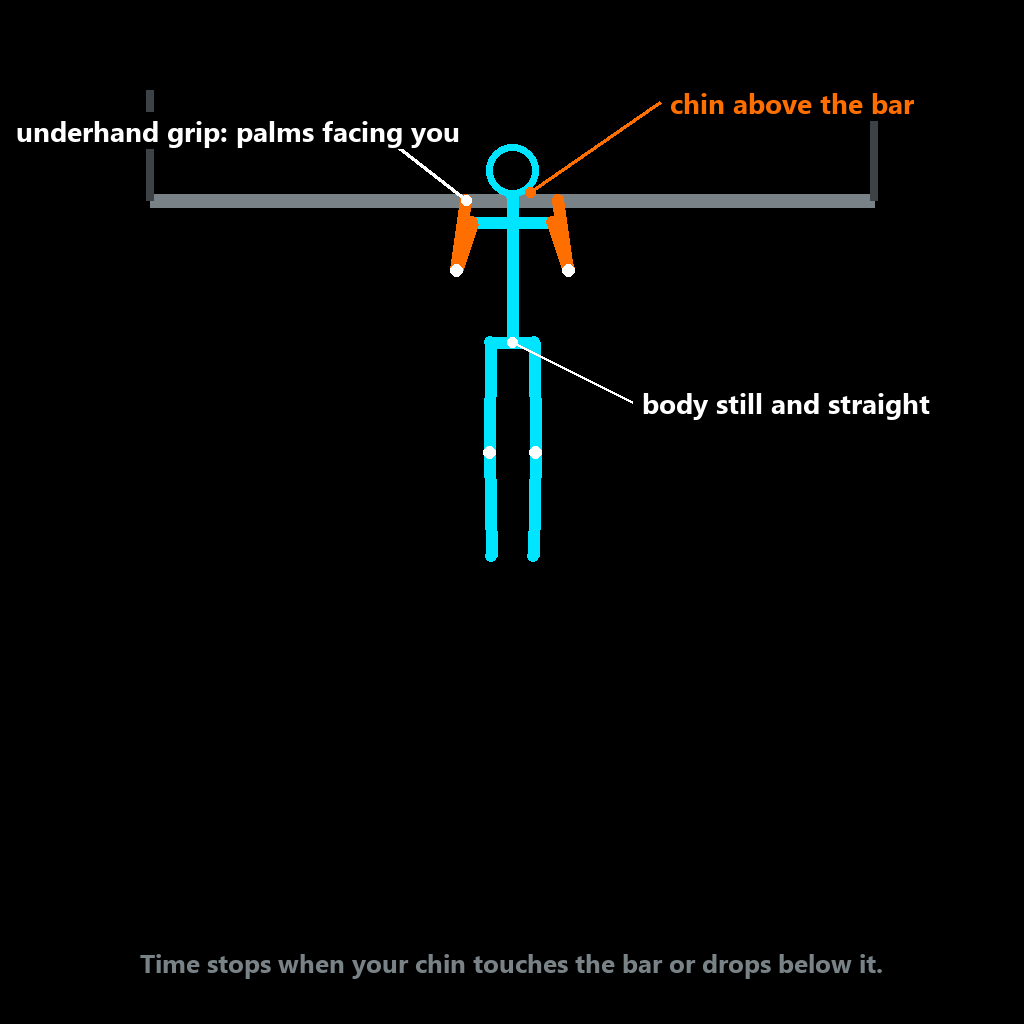
Flexed-arm hang: underhand grip and chin above the bar
Your first weeks, in detail
Week 12
National Police (Inspector), man, intermediate, 4 days: development, load week (exam in 9 weeks)| Day | Session type | Detail | Duration |
|---|---|---|---|
| Monday | Easy run | Easy run 45 min, 80 m strides 4×80 m, Exam-standard pull-ups 3×4 | 65 min |
| Tuesday | Strength | Back squat 4×6, Romanian deadlift 3×8, Weighted step-ups 2×8 per leg, Exam-standard pull-ups 5×5, Top hold (chin over the bar) 3×10 s, Dumbbell row 3×10, Plank 3×30-45 s, Calf raise 2×12, Tibialis raise 2×15 | 58 min |
| Wednesday | Rest | Recovery | — |
| Thursday | Agility circuit | Under-the-hurdle pass (65 cm) 6×1, Tight turn round the post 4×1 per side, National Police agility circuit 6×1 flat out, 10-20 m sprint 4×10 m, Exam-standard pull-ups 3×4 | 56 min |
| Friday | Rest | Recovery | — |
| Saturday | Running intervals | High-knee skips 2×20 m, Butt kicks 2×20 m, Intervals 5×800 m | 47 min |
| Sunday | Rest | Recovery | — |
Week 20
National Police (Inspector), woman, intermediate, 4 days: taper (exam in 1 week)| Day | Session type | Detail | Duration |
|---|---|---|---|
| Monday | Maintenance strength | Back squat 2×5, Romanian deadlift 2×8, Weighted step-ups 8 per leg, Exam-standard flexed-arm hang 3×31 s, Chin-ups 3×3-5, Dumbbell row 2×10, Barbell curl 2×10, Plank 2×30-45 s, Calf raise 12, Tibialis raise 15 | 42 min |
| Tuesday | Easy run | Easy run 26 min, 80 m strides 4×80 m | 41 min |
| Wednesday | Rest | Recovery | — |
| Thursday | Agility circuit | Under-the-hurdle pass (65 cm) 6×1, National Police agility circuit 3×1 flat out | 34 min |
| Friday | Rest | Recovery | — |
| Saturday | Running intervals | High-knee skips 2×20 m, Butt kicks 2×20 m, Exam-pace rehearsal 3×500 m, Fast reps 2×200 m | 39 min |
| Sunday | Rest | Recovery | — |
These examples are real extracts from the EntrenAI planning engine. Your personal plan adjusts to your level, equipment and availability.
Equipment needed
EntrenAI automatically substitutes any exercise if you don’t have the gear.
- A track or a measured 400 m loop for the 1,000 m intervals
- Two hurdles or two chairs with a broomstick at 65 and 72 cm, and two cones or bottles, for the circuit
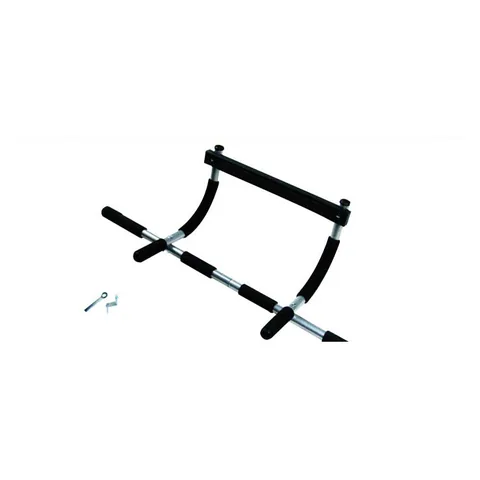
- A pull-up bar (a door-frame one works), no gloves or chalk
- A pull-up band if you can't do 5 reps yet
- The stopwatch on your phone
What most people get wrong (and how to avoid it)
- 1
Leaving the physical tests until after the syllabus
On the Executive Scale they are the first test: if you don't pass them, you never reach the exams you have been studying for months. Three days a week from the start is enough to arrive with a margin.
- 2
Passing narrowly in the mock test and taking it for granted
A 5.1 average in the mock test becomes a fail with nerves, cold or a bad start in the circuit. The plan looks for a margin in all three tests, not a scraped pass.
- 3
Forgetting that a 0 eliminates you even if the average is enough
Fewer than 5 pull-ups or 11.7 s in the circuit (men) are a 0 and eliminate you, even if you score 9 in the other two. The plan puts the test at or near 0 first.
- 4
Training the bar once a week to failure
Pull-ups improve with frequency and far from failure. One weekly session until you can't do any more is the slowest way to improve them.
- 5
Not rehearsing the circuit on the BOE route
Changing the route in the diagram is a void. You need the order of posts and hurdles in your head before the exam, and the only way to get it there is repetition.
Other Entrance tests plan variants
Back to the general Entrance tests plan
- Spanish National Police physical tests: the plan to score high in the circuit, the bar and the 1,000 mA plan for the Spanish National Police physical tests (Basic Scale): circuit, pull-ups or hang and 1,000 m, with the official scoring table and your score at every mock test.
- Guardia Civil physical tests: all four with a margin, with the marks for your ageA plan for the Guardia Civil physical tests (Corporals and Guards): C1 circuit, push-ups, 2,000 m and 50 m swim, with the marks for your sex and your age bracket.
- Spanish Armed Forces enlisted physical tests: pass to get in and be ready when the bar risesA plan for the Spanish Armed Forces enlisted physical tests under Order DEF/15/2026: 2-minute push-ups, plank, seated-start circuit and 2,000 m, with your marks.
- Spanish Armed Forces officer and NCO physical tests: five tests and an academy aheadA plan for the physical tests of Spanish Armed Forces officers, NCOs, common corps and Medicine: five tests including a swim, with the Order DEF/15/2026 marks.
- Spanish Customs Surveillance physical tests: speed, jump and water, all four with a marginA plan for the Spanish Customs Surveillance agent physical tests: 50 m, 800 m, running long jump and 50 m freestyle with a dive, with the official marks.
Frequently asked questions
Yes: agility circuit, pull-ups (men) or flexed-arm hang (women) and 1,000 metres, with the same 0 to 10 table. What changes is how they count: on the Executive Scale they are pass or fail and the score doesn't add to the final mark.
An average of 5 across the three tests and no zeros. For example, a 4 in pull-ups, a 6 in the circuit and a 5 in the 1,000 m average 5 and pass; a 0 in any of them is a fail even if the average is enough.
They are the first test of the Executive Scale exam, before the other exercises. That is why it pays to have them prepared from the start of your studying.
Three days get you there with a margin if you start in time. The plan takes up to five and splits the work by what you are missing most.
The medical certificate on the Colegios de Médicos form. The board may also run a random doping control.
Start your personalized plan today
Download EntrenAI, answer 8 questions, and the AI generates your plan in under 60 seconds. Cancel anytime.
Other plans you might like
Pass the physical tests of your Spanish public-service exam with a plan built for your exam day
A plan for the physical tests of Spain's National Police, Guardia Civil, Armed Forces and Customs: countdown to the exam, mock tests and your official score.
AI-built running plan, from 5K to marathon
A running plan tailored to your level, goal distance and weekly availability: polarized 80/20 training, VDOT pace zones and daily AI recalibration.