AI-built powerlifting training plan
Squat, bench press and deadlift. Linear, daily-undulating or block periodization based on your level. 7–14 day pre-meet peaking using the validated protocol (Travis et al., 2020). Expected 2–7% improvement on competition day.
By Iván López Martín, founder of EntrenAI · updated
What is a powerlifting training plan?
Powerlifting is the maximum-strength discipline: three lifts — squat, bench press, deadlift — and one goal: lift the heaviest possible single rep (1RM). In competition you sum the best valid attempt of each lift; the total decides ranking.
Unlike hypertrophy (where you optimise volume × intensity × frequency), powerlifting optimises specific neuromuscular strength. The main adaptation isn't muscular but neural: high-threshold motor unit recruitment, inter-muscular coordination, millimetric technique under load. That's why plans look different: fewer reps per set (1–6), higher intensity (75–100% 1RM), long rest (3–7 minutes) and strict periodization.
Three validated methodologies by level: linear (add 2–7% per week without changing reps; optimal for beginners), daily undulating (DUP) — Rhea et al. (2002) showed 28.8% squat improvement vs 14.4% linear over 12 weeks for intermediates, and block (mesocycles of hypertrophy → strength → peaking; required for advanced lifters).
EntrenAI applies the right methodology for your level and, if you set a meet date, programs the 7–14 day peak with 50% volume reduction + maintained intensity — the Travis et al. (2020) protocol that delivers 2–7% improvement on the day.
Five powerlifting plans, depending on where you start
The block, the frequency and whether there is a peak all change. Pick yours and you will see its intensity and volume curve, its attempts and its week.
| Plan | Weeks | Intensity | Frequency per lift | Ends with |
|---|---|---|---|---|
| Beginner | 12 | 65-85% | 3×/week | 5RM test |
| Intermediate | 12 | 70-97% | 2×/week | 1RM test |
| Advanced | 16 | 70-100% | 2-3×/week | Meet |
| Peaking for a meet | 3 | 85-93% | 2×/week | Meet |
| No equipment | 12 | By variants | 3×/week | Full pistol and Nordic |
Your AI-generated plan
When you set up your powerlifting plan, EntrenAI does seven things:
1. Determines your real level based on training years + current 1RM relative to bodyweight: beginner (<1 year or <1× BW squat), intermediate (1–3 years or 1.5×), advanced (3+ years or 2×+).
2. Selects the optimal periodization:
- Beginner: pure linear. 3 days/week, 3×5 @ 78% 1RM, RIR 2. Add 2.5 kg upper / 5 kg lower each week while you can hold the target RIR. 2× frequency per lift.
- Intermediate: DUP across 4 days. Day 1 hypertrophy (8–12 reps @ 70%), day 2 strength (3–5 @ 85%), day 3 power (1–3 @ 90%). 3× frequency per lift.
- Advanced: 12–14 week blocks. Hypertrophy (5 wks, 6–12 reps @ 50–75% 1RM, RPE 8). Strength (5 wks, 3–5 reps @ 75–90% 1RM, RPE 8.5). Peaking (3 wks, 1–3 reps @ 90–102% 1RM, RPE 9.5).
3. Distributes volume across the three lifts. Default: 33% squat, 33% bench, 28% deadlift, 6% accessories. If you flag a weak point in onboarding ("my bench is stuck", "I miss squats at the sticking point"), volume reallocates up to 40% on the weak lift and the others reduce proportionally.
4. Programs accessories by weak point. Sticking point at the bottom of the squat? Pause squats + box squats + good mornings. Bench weak in lockout? Close-grip + boards. Deadlift weak in lockout? Rack pulls + deficits. EntrenAI maps 40+ accessories to specific weaknesses.
5. Applies pre-meet peaking if you've set a target date. Travis 2020 protocol: 7–14 day duration (10 optimal). Volume drops to 30% of peak. Intensity holds at 85–95%. Last heavy session 7 days before. Opener selection 7 days before (opener = 90% of expected 1RM). Full rest the last 2 days.
6. Computes target RPE per set. RPE in powerlifting isn't optional — it's the metric that prevents overtraining. RPE 8 = 2 reps in reserve. RPE 9 = 1 rep in reserve. RPE 9.5 = couldn't do another clean rep. EntrenAI prompts for RPE after each heavy set and adjusts the next session: if you log RPE 9 on a set marked RPE 8, it drops the next set's weight 2.5–5%.
7. Blocks unsafe progressions. Backend restrictions: beginners can't train >4 days/week (neural adaptations need 48–72 h recovery; more days raise injury risk), 1RM tests are gated to specific days (each test costs ~10–14 days of recovery), and peaking doesn't unlock for beginners.
The three lifts, with the marks the app corrects
From video or from what you log, the app flags the most common faults. These are the reference positions and the detail it checks in each.
- Hip below the knee
- Knees in line with the feet
- Bar over mid-foot
- Shoulder blades together and down
- Feet planted, natural arch
- Bar touches the base of the chest
- Bar over mid-foot
- Hips between shoulder and knee
- Neutral back, straight arms
Who is this plan for?
Three very different profiles:
- Beginner (0–1 year, relative strength <1× BW squat). Starting Strength-style plan: 3 days/week, 3×5 linear on squat + bench + deadlift + pull-ups + row. Add weight while you can. 12–16 week mesocycles until real stalling (not false plateaus from poor recovery).
- Intermediate (1–3 years, squat 1.5× BW). 12-week DUP with day 1 hypertrophy, day 2 strength, day 3 power. Optimal volume 15 sets/lift/week. 1RM test every 8–12 weeks. With a meet, 10-day peak.
- Advanced (3+ years, squat 2×+ BW). Block periodization: hypertrophy → strength → peaking. 12–14 week mesocycles. 3× frequency per lift. Individualised weak-point work. Multiple peaks per season (2–3 meets/year).
If you have an active shoulder, lower-back or knee injury, EntrenAI detects it and unlocks the Limited-equipment / restricted powerlifting plan: dumbbell variations, Romanian deadlift instead of conventional, goblet squat instead of high-bar back squat, etc. If you've never performed the three barbell lifts, the first 4 weeks are pure technique with very light loads (50–60% of theoretical 1RM).
Your first weeks, in detail
Week 6
Intermediate strength block (DUP) — peak loading week| Day | Session type | Detail | Duration |
|---|---|---|---|
| Monday — Heavy squat | Strength day 1 | Squat 5×3 @ 87% 1RM (RPE 8.5, 4 min rest). Pause squat 3×5 @ 70% (RPE 7). Hip thrust 3×8 (RIR 2). Front plank 3×60 s. Technical focus: controlled descent (3 s), visible pause in the hole, even drive. | 75 min |
| Tuesday — Bench volume | Hypertrophy day 1 | Bench 5×8 @ 70% (RPE 7–8, 3 min rest). Incline DB press 4×10 (RPE 7). Barbell row 4×8 (RIR 1). Triceps pushdown 4×12. Barbell curl 3×10. | 70 min |
| Wednesday | Rest or optional accessories | Hip + ankle + thoracic mobility 30 min. 30–40 min walk. If you want: 20 min light accessories (curls, lateral raises, face pulls). | 30–50 min |
| Thursday — Heavy deadlift | Strength day 2 | Deadlift 5×3 @ 85% (RPE 8.5, 5 min rest). Romanian deadlift 3×6 @ 70% (RPE 7). T-bar row 4×8. Good mornings 3×8 with light bar. Side plank 3×45 s/side. | 80 min |
| Friday — Heavy bench | Strength day 3 (power) | Bench 6×2 @ 90% (RPE 9, 4–5 min rest). Close-grip bench 3×5 @ 75% (RPE 7). Overhead press 4×6. Inverted row 3×max. DB curl 3×10. | 75 min |
| Saturday — Squat volume | Hypertrophy day 2 | Squat 4×6 @ 75% (RPE 8, 3 min rest). Front squat 3×8 @ 60% (RPE 7). Leg press 4×10. Hamstring curl 3×12. Calf raise 4×12. | 75 min |
| Sunday | Rest | Total recovery. Sleep target 8 h+. | — |
Week 13
Meet peaking (week 1 of 2) — Travis et al. 2020| Day | Session type | Detail | Duration |
|---|---|---|---|
| Monday — Squat opener | Opener selection | Warm-up + squat to 90% 1RM (opener, 1 rep). If opener feels clean RPE 8, descend and rest. If RPE 9+, consider dropping 5 kg for meet day. No accessory work. | 55 min |
| Tuesday | Rest | Light mobility 20 min. Walk. | 30 min |
| Wednesday — Bench opener | Opener selection | Warm-up + bench to 90% 1RM (opener, 1 rep). Same criterion as squat: clean RPE 8, hold; RPE 9+, drop 2.5 kg. No accessories. | 45 min |
| Thursday — Deadlift opener | Opener selection | Progressive warm-up + deadlift to 90% 1RM (opener, 1 rep). No accessories. Home, recover. | 55 min |
| Friday | Full rest | No training. Hydration, sleep, food. There's nothing to gain by training now — only to lose. | — |
| Saturday | Pre-meet rest | 20–30 min very easy walk. Light stretching. Carb load (5–7 g/kg). | 30 min |
| Sunday — MEET DAY | Competition | Progressive warm-up at the venue (60% → 70% → 80% → 90% opener). Three attempts per lift. Opener already chosen, second attempt +2.5–5% if opener clean, third +2.5–5% if second clean. | — |
These examples are real extracts from the EntrenAI planning engine. Your personal plan adjusts to your level, equipment and availability.
Equipment needed
EntrenAI automatically substitutes any exercise if you don’t have the gear.
- Competition Olympic bar (20 kg, 2.2 m) or your training bar
- Olympic plates (ideally bumpers for deadlift)
- Squat rack with adjustable safety pins
- Flat bench with supports (support spacing < 1.2 m)
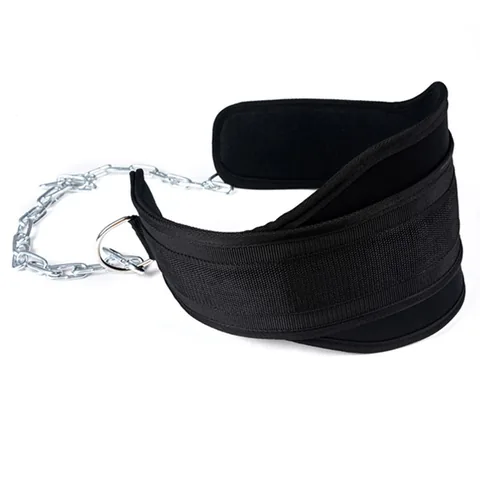
- Stiff lifting belt 10–13 mm for >85% 1RM work
- Footwear: flat shoes (Converse-style) for deadlift, raised-heel shoes (Romaleos-style) for squat
- Chalk or magnesium carbonate for heavy deadlifts
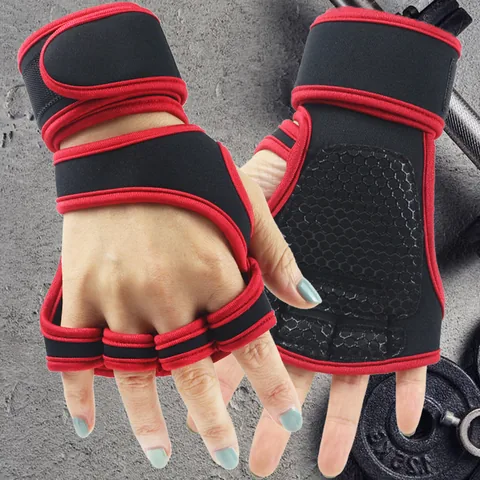
- Optional: knee sleeves 5–7 mm; wrist wraps for heavy bench and overhead press
What most people get wrong (and how to avoid it)
- 1
Running DUP when you should be running linear
Beginners flood forums with DUP, conjugate and block talk. But the literature is clear: with under 1 year of training or a squat <1× BW, pure linear progression beats every other methodology. Add weight every week until you can't — that simple. EntrenAI blocks DUP/block activation until your squat 1RM exceeds 1.5× BW or you have 12+ months of training.
- 2
Testing 1RM every month
A genuine 1RM test (failure, RPE 10) costs 10–14 days of neural recovery. Doing it every 4 weeks like many programs recommend breaks the adaptation window. EntrenAI allows tests every 8–12 weeks (intermediate) or 12–16 weeks (advanced). For interim measurements, use estimates from RPE on 3–5 rep sets — they're mathematically reliable when your RPE is calibrated.
- 3
Skipping the peak
Showing up to meet day without volume reduction is the most expensive mistake. Accumulated fatigue means a lifter trained to the limit will move 5–7% less than they could with proper peaking (Travis 2020). Cutting volume 50% and holding intensity for 10 days isn't 'losing form' — it's unlocking the performance you already have.
- 4
Forcing reps with degraded technique
On squat and deadlift, a rep with rounded back or knee valgus isn't 'one more rep' — it's a rep that exponentially raises hernia or tendinitis risk. RPE 8–9 with perfect technique always beats RPE 10 with broken form. EntrenAI prioritises technical RPE and, if you log lower-back pain after a session, blocks heavy deadlift the next session.
- 5
Skipping weak-point accessories
Accessories aren't 'filler'. A sticking point at the bottom of the squat is fixed with pause squats; a weak bench lockout with close-grip and board presses; a deadlift that fails off the floor with rack pulls + deficits. Skipping accessories means skipping the part of the plan that moves the needle on your weakest lift.
- 6
Not eating enough for the strength phase
Strength powerlifting needs a moderate caloric surplus (200–400 kcal). Lifting 90–95% 1RM in a deficit is mathematically harder: low muscle glycogen = less available power. If your goal is a weight class, schedule the cut outside the peaking block, not during. EntrenAI asks your nutrition goal and adjusts: cuts only happen during hypertrophy or maintenance blocks, never during peaking.
- 7
Ignoring progressive warm-up
In powerlifting, the warm-up is part of the plan: bar → 40% → 60% → 75% → 85% → first work set. Skipping steps to 'save time' means starting work sets with a cold neural system and imprecise technique. Literature recommends 4–6 ramp sets to 90% of the first work set; EntrenAI prescribes them automatically before every heavy session.
Powerlifting plans by goal and level
- AI-built beginner powerlifting planBeginner powerlifting plan that gets you to your first meet in 12-16 weeks: linear periodization, 3-4 sessions a week, adaptive RPE/RIR and a real 1RM.
- AI-built intermediate powerlifting planIntermediate powerlifting plan for your second or third meet: Bulgarian-Texas periodization, calculated openers and a 2-week peak for controlled PRs.
- AI-built advanced powerlifting planAdvanced powerlifting plan for lifters with a Wilks of 380+ and three or more meets: lift specialization, adaptive RPE and a refined 2-3 week peak.
- AI-built powerlifting peaking planA 2-3 week powerlifting peaking plan based on Travis 2020: a 7-10 day taper that halves volume, keeps intensity and simulates your openers and seconds.
- AI-built no-equipment powerlifting planA 12-week powerlifting plan without an Olympic bar: keep your squat, bench and deadlift patterns with dumbbells, bands and sandbags, with real progression.
Frequently asked questions
RPE (Rate of Perceived Exertion) is a 1–10 scale where 10 = absolute failure, 9 = 1 rep in reserve, 8 = 2 reps in reserve. In powerlifting it's the most useful metric because it captures your actual capacity that day — theoretical 1RM shifts with sleep, stress, food. If EntrenAI prescribes 5×3 @ RPE 8.5 and your first set comes in at RPE 9.5, the engine reads it as a low day and drops the following sets 5–7% automatically. That's the difference between following a rigid plan (which leads to failure or overtraining) and an adaptive one.
No. The plan is designed for competition, but 70–80% of users train powerlifting "fed-free", chasing absolute strength only. In that case the plan runs without peaking or meet dates, cycling continuous hypertrophy + strength blocks with 1RM tests every 12–16 weeks to recalibrate weights.
Yes — especially for beginners and intermediates. The hypertrophy block of the plan (weeks 1–5 for advanced) already builds significant muscle. If your goal is 70% powerlifting / 30% physique, EntrenAI adds 4–6 weekly accessory sets (curls, lateral raises, leg accessories) without disrupting the three lifts' progression. For more extreme ratios (50/50), consider the Hybrid strength + cardio plan, which manages interference better.
Effective peaking is 7–14 days, with 10 optimal per Travis 2020. Expected results: 2–7% total improvement vs no peak. After a 12-week block with projected squat 1RM at 180 kg, proper peaking targets 184–192 kg on meet day. Without peak, you'd likely move 175–180.
Depends on severity. Minor (extreme DOMS, muscle tightness): EntrenAI cuts volume on the affected lift 30–50% for 1–2 sessions. Moderate (tendinitis, acute joint pain): the lift is replaced with a safe variant (squat → front or goblet squat, deadlift → Romanian, bench → DB press). Severe (neurological risk, sharp localised pain): the plan pauses pending medical assessment. It never recommends 'pushing through pain'.
Beginner: 3 days optimal, max 4. Intermediate: 4 days optimal, max 5. Advanced: 5 days optimal, max 7 (no hard cap, but diminishing returns). Per-lift frequency is what matters: 2× per movement for beginners, 3× for intermediates and advanced. Higher frequency with less volume per session > more volume with lower frequency.
There's a Powerlifting no-equipment plan that swaps the three barbell lifts for: heavy DB goblet squat, DB Romanian deadlift, DB bench press. Progression is slower because of the load ceiling (DBs typically max ~50–60 kg in most gyms) but the principles and methodology are identical. Reaching competitive levels does require Olympic barbell access.
EntrenAI catches them three ways: (1) onboarding questionnaire where you flag where your lifts feel weak; (2) automatically, by watching RPE patterns at specific ranges (e.g. always high RPE in the first 10 cm of the squat); (3) meet feedback, where a miss at a specific point (mid-bench sticking point, weak floor pull on deadlift) auto-maps to the corrective accessory.
A lot. A powerlifting warm-up isn't 5 minutes on a bike. It's progressive neural activation: specific joint mobility → empty bar 1–2 sets → 40–60% 1RM 3–5 reps → 70–80% 2–3 reps → 85–90% 1 rep → first work set. Skipping these steps means starting at 90% with an unprimed nervous system — worse technique, higher injury risk, lower performance. EntrenAI prescribes the exact warm-up before every heavy set.
Start your personalized plan today
Download EntrenAI, answer 8 questions, and the AI generates your plan in under 60 seconds. Cancel anytime.
Other plans you might like
AI-built general strength training plan
A strength training plan for your level and available days: low reps at 75-90% of 1RM, linear or DUP progression and sets adjusted by AI from your RIR.
AI-built hypertrophy plan
This hypertrophy plan adapts to your level, days and experience. Volume and frequency follow Schoenfeld's meta-analyses, with RIR-driven progression.
EntrenAI or Caliber: a human coach or an AI-generated plan?
Caliber pairs you with a human coach for $49-99/month. EntrenAI builds an adaptive AI plan for 12 sports at €7.99/month. See which one fits you best.