AI-built hypertrophy plan
Optimal weekly volume per muscle group, 2-3 stimuli/week frequency, intensity and RIR adapted to your real level. EntrenAI applies the validated ranges from the literature (Schoenfeld 2017, 2019) and recalibrates daily based on your fatigue and progress.
By Iván López Martín, founder of EntrenAI · updated
What is a personalized hypertrophy plan?
Muscle hypertrophy is the increase in muscle fiber size in response to repeated, progressive mechanical tension. It's not magic, not steroids, not exotic stimuli — it's the sum of three very specific variables: volume (weekly sets per muscle group), intensity (% of your 1RM or proximity to failure measured in RIR) and frequency (how often per week you stimulate each group).
Meta-research from the past 15 years (Schoenfeld et al., 2017, 2019; Krieger 2010; Grgic 2018) has quantified the optimal ranges:
- Volume: 10 weekly sets per muscle is the minimum effective dose for beginners; 15 sets is optimal for intermediates; 20 sets for advanced lifters. Above 25 sets you typically hit the "maximum recoverable volume" (Sweet Spot Volume — beyond this, gains plateau).
- Intensity: between 60-80 % of 1RM produces hypertrophy in any rep range (6-15) provided you train close to failure (RIR 0-3).
- Frequency: 2 stimuli per muscle per week is optimal; 3 may be superior for advanced lifters; once per week is suboptimal at all levels.
EntrenAI codes those ranges precisely and adapts your plan to your training days, the split that works best for you (Full Body, Upper-Lower, Push-Pull-Legs) and your real level — measured by years of training plus performance on the main lifts.
Eight hypertrophy plans, by your days and your level
The frequency, the split and the sets per muscle change. Pick yours and you will see its week, its volume and its mesocycle.
| Plan | Days | Split | Sets/muscle/week | Session |
|---|---|---|---|---|
| Beginner | 3 | Full body A/B | 8-10 | 50-60 min |
| Intermediate | 4 | Upper / lower | 12-16 | 60-70 min |
| Advanced | 5-6 | Push / pull / legs + upper / lower | 16-22 | 70-80 min |
| 3 days | 3 | Full body | 10-12 | 60 min |
| 4 days | 4 | Upper / lower | 12-16 | 60-70 min |
| 5 days | 5 | Push / pull / legs / upper / lower | 14-18 | 60-70 min |
| 6 days | 6 | Push / pull / legs ×2 | 16-22 | 50-60 min |
| Women | 4 | Legs and glutes ×2, upper ×2 | Glutes 18-20, rest 8-14 | 60 min |
Your AI-generated plan
When you fill out the onboarding questionnaire, EntrenAI does six things:
1. Assesses your real level from years of training + performance on the main lifts (squat, deadlift, bench, pull-ups). Beginner: <1 year or <1× bodyweight squat. Intermediate: 1-3 years or 1.5×. Advanced: 3+ years or 2×+.
2. Calculates the volume target per muscle group:
- Beginner: 10 sets/week (range 6-14) per group
- Intermediate: 15 sets/week (range 10-20)
- Advanced: 20 sets/week (range 15-25)
3. Picks the split based on your available days. Full Body (3-4 days) hits each muscle 3 times/week. Upper-Lower (4-5 days) hits each twice. Push-Pull-Legs (5-6 days) hits each twice with more specific volume. EntrenAI doesn't force a split: with 4 days available, it decides between Upper-Lower or PPL+Full based on your priority (total volume vs aesthetic balance).
4. Sets per-exercise intensity. Heavy compounds (squat, deadlift, bench) at 70-80 % 1RM with RIR 1-3. Accessories (curl, lateral raise, leg curl) at 60-75 % with RIR 0-2 (closer to failure, where lighter weights allow it without risk). The last set of every exercise is prescribed at RIR 0-1 — where the highest adaptation lives.
5. Periodizes in 4-week mesocycles. Weeks 1-3 ramp volume up (+10 % each week). Week 4 is the deload: -40-50 % volume, intensity preserved. The cycle restarts in week 5 with a slightly higher base volume. Every 4-6 weeks, depending on your level.
6. Adjusts every session with your real RIR. After each set you log the perceived RIR (how many reps you had left in the tank). The backend engine analyzes patterns: if your average RIR on an exercise is ≥ 4 (always too many reps left), it suggests +10 % to base weight next time. If your RIR is consistently ≤ 1 (always failing or close), it suggests -10 %. This kills the classic "base weight never updates" problem and keeps real intensity inside the optimal range.
The 5-week mesocycle: sets up, RIR down, then deload
Each week adds one set per muscle and leaves one rep less in reserve (RIR). In week 5 volume drops by half so the muscle grows from what was accumulated. Then the next mesocycle starts slightly higher.
- Sets/muscle
- RIR
Who is this plan for?
Four typical profiles:
- Beginner (0-1 year training, 3-4 days/week). Full Body plan with focus on learning the compound movements. 3 sessions/week, 6-10 sets per group, 6-15 reps, RIR 2-4. Linear progression: 2.5 kg upper / 5 kg lower per week as long as it sticks. 4-week mesocycles with simple deloads.
- Intermediate (1-3 years, 4-5 days). Upper-Lower or light PPL. 4 sessions/week, 12-15 sets per group, RIR 1-3. Daily Undulating Periodization (DUP) appears: day 1 hypertrophy (8-12 reps at 70 %), day 2 strength (3-5 reps at 85 %), day 3 power (1-3 reps at 90 %). More stimuli, better adaptation.
- Advanced (3+ years, 5-6 days). Full Push-Pull-Legs with block periodization. 18-22 sets per group, RIR 0-2. Shorter but intense deloads. Personalized weak-point work and alternated muscle specialization.
- Female hypertrophy. Same principles, specific tweaks: typically a more conservative RIR range (women recover slightly faster between sets, but accumulated fatigue is similar), emphasis on hip thrust + assisted pull-ups + glute work, and menstrual cycle adaptation: late follicular and ovulation phases unlock PR windows (higher estrogen = higher force production); late luteal with PMS automatically drops volume by 15 % and intensity by 10 %.
Never trained before? The beginner plan teaches the 6 compound movements before pushing real volume. Coming from calisthenics or running? EntrenAI detects it and leverages your existing relative strength to accelerate progression without skipping tendon adaptation.
Your first weeks, in detail
Week 3
Intermediate PPL — peak load week| Day | Session type | Detail | Duration |
|---|---|---|---|
| Monday — Push | Chest, shoulders, triceps | Bench press 4×6-8 @ 78 % 1RM (RIR 2). Incline DB press 3×8-10 (RIR 2). Overhead press 4×6-8 (RIR 1). Cable flyes 3×12-15 (RIR 0). Lateral raises 4×12 (RIR 1). Triceps pushdown 3×10-12 (RIR 1). EZ-bar extension 3×10 (RIR 0). | 75 min |
| Tuesday — Pull | Back, biceps | Deadlift 4×5 @ 80 % 1RM (RIR 2). Weighted pull-ups 4×6-8 (RIR 2). Barbell row 4×8 (RIR 2). Lat pulldown 3×10-12 (RIR 1). Face pull 3×15 (RIR 1). Barbell curl 4×10 (RIR 1). Hammer curl 3×12 (RIR 0). | 80 min |
| Wednesday — Legs | Quads, glutes, hamstrings | Squat 5×5 @ 80 % (RIR 2). Hip thrust 4×8 (RIR 2). Leg press 3×10-12 (RIR 1). Leg curl 4×10-12 (RIR 1). Leg extension 3×12 (RIR 0). Standing calf raise 4×12 (RIR 1). | 85 min |
| Thursday | Rest | Recovery. Optional hip + ankle mobility. 30-40 min walk. | — |
| Friday — Push | Chest, shoulders, triceps (volume) | Incline barbell press 4×8 @ 72 % (RIR 1). Flat DB press 3×10 (RIR 1). Arnold press 3×10 (RIR 1). High-low cable crossover 3×12-15 (RIR 0). Cable lateral raise 4×15 (RIR 0). Overhead extension 3×10 (RIR 0). Cable pushdown 3×12 (RIR 0). | 75 min |
| Saturday — Pull | Back, biceps (volume) | T-bar row 4×8-10 (RIR 1). Pronated pulldown 4×10 (RIR 1). Seated cable row 3×12 (RIR 0). Pullover 3×12-15 (RIR 0). Shrugs 3×15 (RIR 0). Preacher curl 3×10 (RIR 1). Cable curl 3×12 (RIR 0). | 70 min |
| Sunday | Rest | Full recovery. | — |
Week 4
Intermediate PPL — deload (-45 % volume)| Day | Session type | Detail | Duration |
|---|---|---|---|
| Monday — Push | Keep movement, drop volume | Bench press 3×5 @ 70 % (RIR 3). Incline DB press 2×8 (RIR 2). Overhead press 2×8 (RIR 2). Cable flyes 2×12 (RIR 1). Triceps pushdown 2×12 (RIR 1). | 45 min |
| Tuesday — Pull | Keep movement, drop volume | Deadlift 3×3 @ 70 % (RIR 3). Pull-ups 2×6 (RIR 2). Barbell row 2×8 (RIR 2). Lat pulldown 2×10 (RIR 1). Barbell curl 2×10 (RIR 1). | 45 min |
| Wednesday — Legs | Keep movement, drop volume | Squat 3×5 @ 70 % (RIR 3). Hip thrust 2×8 (RIR 2). Leg press 2×10 (RIR 1). Leg curl 2×10 (RIR 1). | 50 min |
| Thursday | Full rest | Total recovery. | — |
| Friday | Optional light session | 30 min full body @ 60 % with accessories (curl, lateral raise, leg curl, planks). | 30 min |
| Saturday | Rest | 20 min active mobility + 30 min walk. | — |
| Sunday | Rest | Sleep target 8-9 h. Next week: new mesocycle with +5 % base volume. | — |
These examples are real extracts from the EntrenAI planning engine. Your personal plan adjusts to your level, equipment and availability.
Equipment needed
EntrenAI automatically substitutes any exercise if you don’t have the gear.
- Gym access with Olympic bars, plates and dumbbells up to at least 30 kg / 65 lb
- Squat rack with safety pins (essential for training to failure on compounds)
- Adjustable flat/incline/decline bench
- Adjustable cable pulley (high/low) — for flyes, pulldowns, face pulls
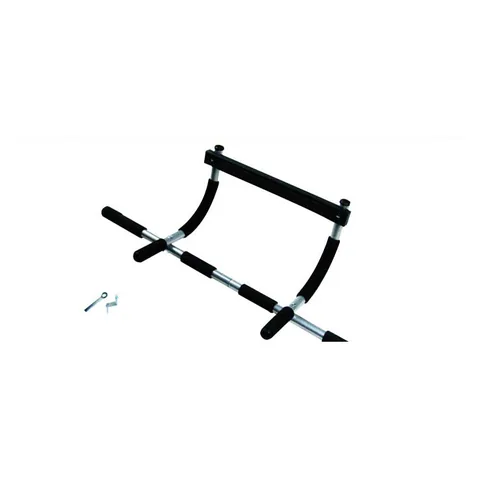
- Pull-up bar with the option to add weight
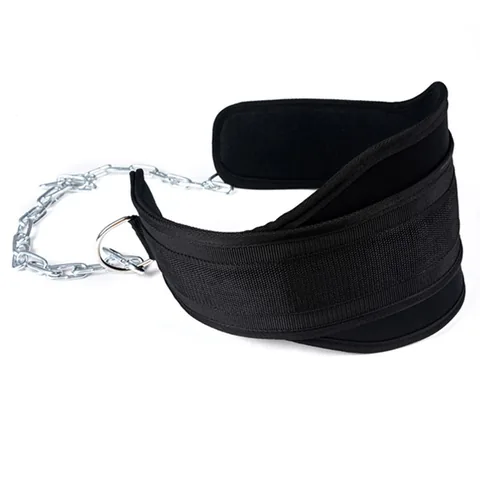
- Weight belt or chain belt (for weighted pull-ups and dips)
- Optional but useful: resistance bands for accommodating load, leg extension/curl machines
What most people get wrong (and how to avoid it)
- 1
Always adding weight, regardless of reps
The classic gym mistake. You add 2.5 kg every week to bench but go from clean 3×8 to ugly 3×4 with broken form. That's not progression, it's regression: hypertrophic stimulus needs reps in the 6-15 range with RIR 0-3. If reps drop below the range with forced RIR ≥ 4 from poor form, you should hold the weight and increase reps first. EntrenAI blocks weight increases when prior performance can't sustain the target rep range.
- 2
5 different exercises per muscle group every session
More variety seems better, but the evidence is clear: 2-3 well-executed exercises per group produce equal or more hypertrophy than 5-6 mediocre ones. Variety matters between microcycles, not within a session. EntrenAI rotates exercises every 4-8 weeks to refresh the stimulus, but caps each session at the exercises that actually deliver.
- 3
Training to absolute failure on every set of every exercise
Failure is only justified on the last set of each exercise (especially accessories). Reaching failure on heavy compounds piles brutal systemic fatigue and tanks recovery between sessions. RIR 1-3 on heavy compounds, RIR 0-1 on accessories and the last set. That's what the literature calls 'effective reps' — more adaptation, less residual fatigue.
- 4
Skipping deload weeks
Week 4 of the mesocycle drops volume by 40-50 %. Many lifters skip it because 'I'll lose my gains'. They won't: supercompensation happens during deloads. Without regular deloads, your effective volume drops over time as accumulated fatigue degrades the quality of hard sets. EntrenAI schedules them every 4-6 weeks based on your level and blocks progression if you try to skip them.
- 5
Excessive cardio simultaneously with hypertrophy
The Hickson effect (1980) and recent meta-analyses confirm **strength-endurance interference**. More than 3 intense weekly cardio sessions reduces hypertrophy gains by 15-20 %. EntrenAI allows up to 2 short (≤30 min) Z2 cardio sessions per week with no penalty; anything beyond that requires lowering hypertrophy volume by 20-30 %.
- 6
Not eating enough protein
The minimum threshold for hypertrophy is 1.6 g/kg of bodyweight/day. Optimal is 1.8-2.2 g/kg. Below 1.6 the data is conclusive: even with perfect training, gains drop 30-40 %. Spread across 4-5 meals at 0.4 g/kg per meal. EntrenAI calculates your target based on your weight and shows the macro breakdown in the nutrition tab.
- 7
Ignoring sleep and stress
Sleeping <6 h/night reduces muscle protein synthesis by 18 % (Reilly & Edwards, 2007). Chronic high stress elevates cortisol and blunts testosterone. EntrenAI asks you every morning about sleep and stress: if you spend 3 days with sleep <7 h or stress >7/10, the session volume drops 20-30 % automatically so you train closer to your real capacity that day.
Hypertrophy plans by goal and level
- AI-built beginner hypertrophy planThis beginner hypertrophy plan is built on technique: Full Body 3 days a week, 12-16 weeks and a conservative RIR of 2-3 to progress without overtraining.
- AI-built intermediate hypertrophy planThis intermediate hypertrophy plan runs PPL or Upper/Lower: 16-20 weekly sets per group, RIR 1-2 and block periodization after 1-2 years of training.
- AI-built advanced hypertrophy planThis advanced hypertrophy plan combines specialization blocks, drop sets and rest-pause, 5-6 days a week, for lifters with more than 3 years of training.
- AI-built 3-day hypertrophy planThis 3-day hypertrophy plan uses a Full Body format: 12-15 weekly sets per group, frequency 2 for key groups, adaptive RIR and 60-75 minute sessions.
- AI-built 4-day hypertrophy planThis 4-day Upper/Lower hypertrophy plan is the sweet spot between volume and recovery: 16-18 weekly sets per group, frequency 2 and adaptive RIR.
- AI-built 5-day hypertrophy planThis 5-day hypertrophy plan combines Upper/Lower and Push/Pull/Legs: 18-22 weekly sets per group over 12-16 weeks for intermediate and advanced lifters.
- AI-built 6-day hypertrophy planThis 6-day hypertrophy plan repeats Push/Pull/Legs twice a week: 22-28 weekly sets per group over 12-16 weeks, for advanced lifters who recover well.
- AI-built women's hypertrophy planThis women's hypertrophy plan targets glutes, hamstrings and back: 4-5 days a week, 16-20 sets per group and volume adjusted to your menstrual cycle phase.
Frequently asked questions
Measurable muscular changes (skinfolds, photos, tighter shoulders/arms in clothes): 8-12 weeks with a structured plan and adequate nutrition. Fast strength gains: the first 4-6 weeks (neural adaptation). Significant body composition changes: 16-24 weeks. EntrenAI tracks your progress with optional photos, skinfolds if you take them, and per-exercise performance so you see objective evolution beyond the mirror.
The minimum effective dose is 3 days Full Body. Below that, accumulating sufficient volume with 2× per group frequency is hard. 4 days (Upper-Lower) is the cost/benefit sweet spot for most. 5-6 days (PPL) maximizes gains for intermediates and advanced lifters but requires impeccable nutrition and recovery. More than 6 days adds no benefits and increases overtraining risk.
The principles are identical (volume, intensity, frequency, RIR). Differences are subtle: women tend to tolerate slightly more per-session volume (better between-set recovery), often respond very well to 3× per group frequency, and EntrenAI integrates menstrual cycle adaptation (5 phases with specific volume and intensity modifiers). The female plan prioritizes glute + hamstring + lower back work and progressive assisted pull-ups, keeping the rest of the approach common.
Yes, in two contexts: beginners (clear recomposition for the first 6-12 months) and significantly overweight individuals. For intermediates and advanced lifters with moderate body fat, recomposition slows down and it usually pays to alternate caloric surplus blocks (bulking, +200-400 kcal above maintenance) with deficit blocks (cutting, -300-500 kcal). EntrenAI distinguishes both modes in the questionnaire and adjusts volume and intensity: in cutting mode it drops volume 15-20 % and holds intensity to preserve mass.
Not you — EntrenAI keeps it automatically. Every set you log (weight x reps x RIR) updates your personal database per exercise. Weekly progression is calculated from that base, not from a generic value. That's why two people with the same plan can be lifting completely different weights at week 8 — because the plan adapts to real performance, not theoretical.
Missing 1 session: EntrenAI doesn't force it into another day (that destabilizes frequency). It rebalances pending muscle groups across remaining sessions, keeping total volume reduced by 15-20 %. Missing 3+ days in a row: the next week adjusts to a 'return' volume that restores frequency without demanding peak loads. If you report joint pain, all exercises affecting that area are auto-substituted with safe alternatives.
Hard to maintain both at high performance — interference is real. EntrenAI offers two paths: the Strength + cardio hybrid plan (compromise on both, smaller gains in each), or alternating blocks (12 weeks hypertrophy, then 12 weeks running with strength maintenance). The first option is available directly; the second is configured in the questionnaire by selecting 'cycle goals every 12 weeks'.
No absolute winner. Free weights (squat, deadlift, bench) are superior in functional transfer and produce more neural stimulus. Machines are superior in isolation, safety and efficiency for specific groups (quads on hack squat, glutes on barbell-supported hip thrust). EntrenAI mixes both: compounds with bar/dumbbells, accessories with machines or cables. If your gym lacks something, substitutions are automatic (Romanian deadlift → hip thrust + leg curl, for example).
Start your personalized plan today
Download EntrenAI, answer 8 questions, and the AI generates your plan in under 60 seconds. Cancel anytime.
Other plans you might like
AI-built general strength training plan
A strength training plan for your level and available days: low reps at 75-90% of 1RM, linear or DUP progression and sets adjusted by AI from your RIR.
AI-built powerlifting training plan
Powerlifting training plan with block periodization, 7-14 day meet peaking (Travis 2020), weak-point work and daily fatigue adjustment, for every level.
EntrenAI or Fitbod: a gym-only AI or a plan for every sport?
Fitbod builds AI gym workouts around your equipment and recovery; EntrenAI plans 12 sports, from lifting to running and HYROX. An honest comparison.
EntrenAI or Caliber: a human coach or an AI-generated plan?
Caliber pairs you with a human coach for $49-99/month. EntrenAI builds an adaptive AI plan for 12 sports at €7.99/month. See which one fits you best.
Related questions
Which app builds your gym routine for you and makes it progress?
The difference between a workout log (Hevy), a session generator (Fitbod) and a plan with RIR progression (EntrenAI), and when each one fits.
Alpha Progression alternatives: strength and hypertrophy apps
Alpha Progression is a strength app with free logging and generated plans in Pro. Alternatives by case, with limits: Boostcamp, Jefit and EntrenAI.
Can you build muscle training 3 days a week?
Yes: three full-body sessions give you frequency 2 and 12-15 sets per muscle group, what the evidence asks for. How to split them and progress by RIR.