AI-built general strength training plan
Squat, deadlift, press, pull-ups. Low reps (3-6), real intensity (75-90 % 1RM) and linear or DUP progression based on your level. EntrenAI adjusts every set with your real RIR and respects the progression ratios that prevent plateaus.
By Iván López Martín, founder of EntrenAI · updated
What is a general strength training plan?
General strength is the ability to produce maximum muscular tension across the fundamental movement patterns: horizontal and vertical pushing, horizontal and vertical pulling, squat, hip hinge and lunge. It's not the same as hypertrophy: here the goal is raw strength, not necessarily muscle size.
The difference translates into very specific variables. While hypertrophy works in the 6-15 rep range at 60-80 % 1RM, strength lives in the 3-6 rep range at 75-90 % 1RM, with long rest periods (3-5 min between sets) and a more conservative proximity to failure (RIR 1-3). The stimulus that drives strength gains is neural before muscular: you learn to recruit more fibers simultaneously, faster and with better intermuscular coordination.
EntrenAI structures the plan around the 5-7 main compound exercises, trains them at 2-3× weekly frequency, and progresses them with linear (beginners), DUP — Daily Undulating Periodization (intermediates) or block (advanced) models. In all cases, secondary accessories work in higher rep ranges (8-12) to complement the strength base with muscle.
Five strength plans, by level and by days
The way you progress (linear, undulating or blocks) and how often each main lift is hit change. Pick yours and you will see its intensity curve, its week and its 1RM table.
| Plan | Days | Progression | Frequency per lift | Main range |
|---|---|---|---|---|
| Beginner | 3 | Linear per session | 3×/week | 5-8 reps · 65-80% |
| Intermediate | 4 | Weekly undulating | 2×/week | 3-6 reps · 75-90% |
| Advanced | 4-5 | Block | 2-3×/week | 1-5 reps · 80-95% |
| 3 days | 3 | One heavy lift per day | 3×/week | 3-6 reps · 70-88% |
| 4 days | 4 | Heavy / volume | 2×/week | 3-6 reps · 72-88% |
Your AI-generated plan
1. Initial 1RM theoretical test. In the questionnaire you input your best known or estimated marks for squat, bench, deadlift, overhead press and pull-ups. With no reference, EntrenAI proposes a safe submaximal test (3-5 reps) and calculates your theoretical 1RM with the Epley formula (1RM = weight × (1 + 0.0333 × reps)).
2. Distribution by level:
- Beginner (<1 year): classic 3×5 at 80 % 1RM with linear progression. Each session adds weight (2.5 kg upper, 5 kg lower) as long as you can maintain the format. When you stall (3 consecutive sessions without completing 3×5), drop 10 % and ramp back up.
- Intermediate (1-3 years): DUP. Monday hypertrophy (8-12 reps at 70 %), Wednesday strength (3-5 reps at 85 %), Friday power (1-3 reps at 90 %). More neural and muscular stimuli within the same week — better adaptation than linear 5×5.
- Advanced (3+ years): block periodization. Hypertrophy block (4 weeks, 6-12 reps), strength block (4 weeks, 3-5 reps), peak block (3 weeks, 1-3 reps at 90-100 % intensities). Each block has a specific goal and max loads are scheduled at the end of the cycle, not constantly.
3. Progression based on real RIR. For each lift, after each session you log weight used, completed reps and RIR. If your RIR is consistently above the target range (e.g. you asked for RIR 2 and report RIR 4 in 3 consecutive sessions), the plan bumps the weight 10 % next time. If you report RIR 0-1 when RIR 3 was prescribed (=near-failure when it shouldn't be), it drops the weight 10 %.
4. Frequency and rest. Each main lift appears 2-3× per week (Grgic 2018: 2× frequency beats 1× at equal volume). Heavy-set rests are 3-5 minutes — not optional, this is the difference between training real strength and training muscular endurance.
5. Strategic deloads. Every 4-6 weeks (depending on your level), a deload week: -40 % volume, intensity held or slightly reduced. Strength supercompensation appears precisely there.
The rep table and the estimated 1RM
The engine estimates your 1RM with the Epley formula (weight × (1 + reps/30)) from every set you log, and from there works out the next weight. This plan works mostly in the marked range: 3-6 reps, 75-93%.
| Reps | % 1RM | 1RM 60 kg | 1RM 100 kg | 1RM 140 kg | 1RM 180 kg |
|---|---|---|---|---|---|
| 1 | 100 % | 60 kg | 100 kg | 140 kg | 180 kg |
| 2 | 96 % | 57.5 kg | 95 kg | 135 kg | 172.5 kg |
| 3 | 93 % | 55 kg | 92.5 kg | 130 kg | 167.5 kg |
| 4 | 90 % | 55 kg | 90 kg | 125 kg | 162.5 kg |
| 5 | 87 % | 52.5 kg | 87.5 kg | 122.5 kg | 157.5 kg |
| 6 | 85 % | 50 kg | 85 kg | 120 kg | 152.5 kg |
| 8 | 80 % | 47.5 kg | 80 kg | 112.5 kg | 145 kg |
| 10 | 75 % | 45 kg | 75 kg | 105 kg | 135 kg |
| 12 | 70 % | 42.5 kg | 70 kg | 97.5 kg | 125 kg |
Who is this plan for?
Three main profiles:
- Beginner (0-1 year, 3-4 days/week). Linear 3×5 across the 5 big lifts (squat, deadlift, bench, overhead press, pull-ups). 3 sessions/week, 60-75 min sessions with 4-6 exercises each. Modest volume but rapid progression — beginners can add 5-7 % weekly load on big lifts for the first 3-6 months.
- Intermediate (1-3 years, 4-5 days). DUP. 4 sessions/week with 5-6 exercises each, specific accessories for weak points (grip, bench lockout, squat depth). Slower progression (1-3 % per week) but sustained.
- Advanced (3+ years, 5 days). Block periodization. 5 sessions/week with 3× frequency on main lifts. Peak work at 90-100 % intensities. 0.5-2 % progression per week, 12-16 week plans culminating in a 1RM test.
Coming from hypertrophy and want to "now build strength"? The plan adjusts volume (typically drops 30-40 % vs your current routine) and pushes intensity. The typical hypertrophy-to-strength transition lasts 4-6 weeks until the nervous system adapts to heavy loads.
Your first weeks, in detail
Week 4
Intermediate DUP — peak load week of the block| Day | Session type | Detail | Duration |
|---|---|---|---|
| Monday — Hypertrophy | Squat + leg accessories | Squat 4×8 @ 72 % 1RM (RIR 2). Romanian deadlift 4×8 (RIR 2). Leg press 3×10 (RIR 1). Leg curl 3×12 (RIR 1). Plank 3×60s. Rest: 2-3 min compounds, 90 s accessories. | 75 min |
| Tuesday — Hypertrophy upper | Bench press + accessories | Bench press 4×8 @ 72 % (RIR 2). Barbell row 4×8 (RIR 2). Overhead press 3×8 (RIR 2). Pronated pull-ups 3×AMRAP (RIR 1). Barbell curl 3×10 (RIR 1). Skullcrusher 3×10 (RIR 1). Rest: 2-3 min compounds, 90 s accessories. | 75 min |
| Wednesday | Rest | Mobility 20 min + 30 min walk. | — |
| Thursday — Strength | Heavy squat + deadlift | Squat 5×3 @ 87 % (RIR 1). Conventional deadlift 4×3 @ 85 % (RIR 1). Hip thrust 3×6 with bar (RIR 2). Good mornings 3×8 (RIR 1). Side plank 3×30s/side. Rest: 4-5 min compounds. | 85 min |
| Friday — Strength upper | Heavy bench + row | Bench press 5×3 @ 87 % (RIR 1). Pendlay row 4×4 @ 82 % (RIR 1). Strict overhead press 4×4 @ 85 % (RIR 1). Weighted pull-ups 4×5 (RIR 1). Close-grip bench 3×6 (RIR 1). Rest: 4-5 min compounds. | 85 min |
| Saturday — Power | Speed + max loads | Squat 6×2 @ 90 % (RIR 1). Deadlift 5×2 @ 88 % (RIR 1). Pause bench press 5×3 @ 85 % (RIR 1). Vertical jump 4×3. Push press 4×3 @ 85 %. Rest: 5 min max compounds. | 90 min |
| Sunday | Rest | Total recovery. Next week: deload -40 % volume. | — |
Week 8
Advanced peak block — week 1 of 3 (88-95 % intensities)| Day | Session type | Detail | Duration |
|---|---|---|---|
| Monday | Squat + back assistance | Squat 5×3 @ 90 % 1RM (RIR 1). Front squat 3×4 @ 80 % (RIR 1). Pause squat 2×3 @ 75 % (RIR 2). Good mornings 3×6 (RIR 1). Pull-through 3×10 (RIR 1). | 90 min |
| Tuesday | Bench + chest accessories | Bench press 5×3 @ 90 % (RIR 1). Close-grip bench 3×5 @ 80 % (RIR 1). Incline DB press 3×6 (RIR 1). Cable flyes 3×10-12 (RIR 0). Cable pushdown 3×8 (RIR 1). | 85 min |
| Wednesday | Deadlift + back | Deadlift 5×2 @ 88 % (RIR 1). Sumo deadlift 3×3 @ 80 % (RIR 1). Pendlay row 4×5 @ 80 % (RIR 1). Weighted pull-ups 4×4 (RIR 1). Barbell curl 3×6 (RIR 1). | 85 min |
| Thursday | Recovery / mobility | 30 min mobility + 30 min walk. | 60 min |
| Friday | Speed squat + accessories | Squat 8×2 @ 75 % at speed (RIR 3, focus on explosiveness). Walking lunge with bar 3×6/leg (RIR 1). Hip thrust 3×6 (RIR 1). Plank 3×60s. | 75 min |
| Saturday | Peak bench + push press | Bench press 4×2 @ 92 % (RIR 1). Board press 3×3 @ 85 % (RIR 1). Push press 4×3 @ 85 % (RIR 1). Overhead press 3×5 (RIR 1). Pronated pull-ups 3×AMRAP (RIR 1). | 85 min |
| Sunday | Rest | Sleep target 8-9 h. Next week: 5×2 @ 92 % squat and bench. | — |
These examples are real extracts from the EntrenAI planning engine. Your personal plan adjusts to your level, equipment and availability.
Equipment needed
EntrenAI automatically substitutes any exercise if you don’t have the gear.
- Gym access with Olympic bar (20 kg) and plates up to at least 100 kg/side
- Squat rack with functional safety pins (essential for safe failure training)
- Solid flat bench (capable of supporting 200+ kg without flex)
- Platform or floor suitable for deadlifts (don't pull heavy on parquet without protection)
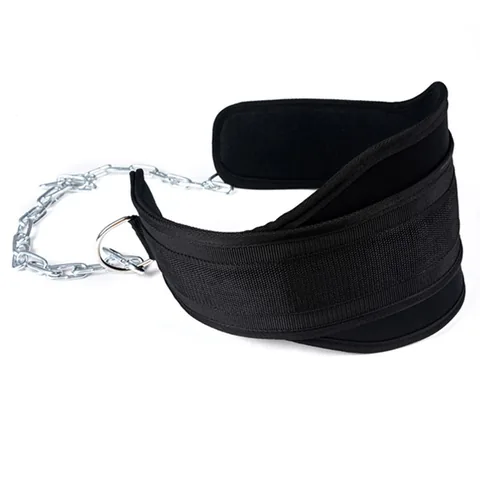
- Lifting belt (essential past 1× bodyweight squat and deadlift)
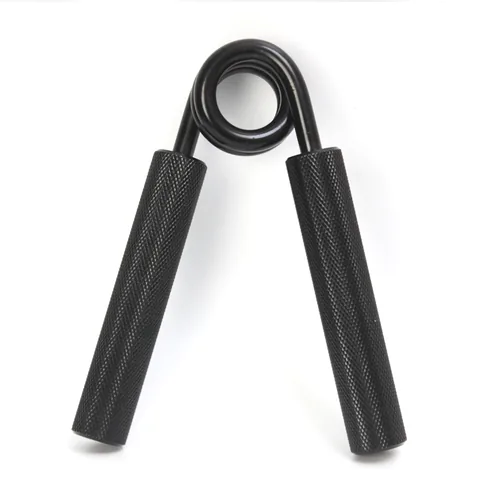
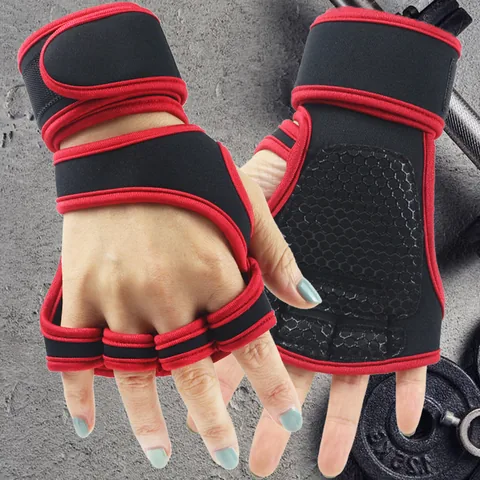
- Wrist wraps and knee sleeves (optional but recommended for intermediates and advanced)
- Chalk or magnesium (deadlift: pronated grip fails before back in many athletes)
What most people get wrong (and how to avoid it)
- 1
Confusing 'heavy' with 'to failure'
Heavy lifting means high loads with perfect technique and controlled RIR (1-3). It's not hitting failure every set. Failure on heavy compounds (squat, deadlift, bench) wrecks technique, piles systemic fatigue and increases injury risk without adding adaptation. EntrenAI prescribes RIR 1-3 on compounds and rarely RIR 0 — and only on the last set of a specific day.
- 2
Skipping accessories
Big lifts develop global strength, but accessories fix weak points. If your squat stalls in the hole, you need pause squats. If your bench locks at the top, you need board press and heavy triceps. Accessories are 30-40 % of the plan volume; cutting them looks efficient but plateaus you in the medium term.
- 3
Short rest on compounds
3-5 rep sets at 85 % require **3-5 minutes between sets** to recover the neural and muscular system enough. With 90-second rest, the next set is 10-15 % weaker — you're training muscular endurance, not strength. If you're short on time, slot accessories between compound sets (antagonist supersets), don't shorten rest.
- 4
Linear progression forever
Beginners add 2.5-5 kg every session for 3-6 months. Brutal. But not sustainable: an intermediate athlete trying to keep linear stalls and frustrates. The transition to DUP (intermediates) or block periodization (advanced) is mandatory, not optional. EntrenAI auto-switches the progression model when your level justifies it.
- 5
Disrespecting the hip hinge pattern
Deadlift and RDL are technically complex. Lifting 1.5-2× your bodyweight with a poorly-executed hinge is the recipe for a hernia or chronic low-back pain. Before loading serious weights, dedicate 4-6 weeks to perfecting the pattern with moderate loads (60-70 %) and, if possible, with video. EntrenAI blocks progressions above a certain threshold if your questionnaire suggests limited technical experience.
- 6
Ignoring sleep and stress
Strength is highly neural-state dependent. A bad night reduces your max force production by 5-10 %. Chronic high stress elevates cortisol and reduces neural adaptations. EntrenAI auto-drops intensity 5-10 % if you report sleep <6 h or stress >8/10 — not from softness, from respect for your real performance that day.
- 7
Too much cardio in strength blocks
More than 2 intense weekly cardio sessions interferes with strength gains (Hickson, 1980, replicated in dozens of studies). EntrenAI allows up to 2 short (≤30 min) Z2 sessions per week. Anything beyond requires switching to the **Strength + cardio hybrid** plan, where interference is managed via alternating blocks.
General Strength plans by goal and level
- AI-built beginner strength planA beginner strength plan built on squat, deadlift, bench and overhead press: three sessions a week, adding 2.5 kg per session over 12-16 weeks.
- AI-built intermediate strength planAn intermediate strength plan for lifters who no longer progress every session: 5/3/1 or Texas Method periodization, four days a week and RPE-based loads.
- AI-built advanced strength planAn advanced strength plan for lifters with three or more years under the bar: daily undulating periodization, specialization blocks and RPE-based loads.
- AI-built 3-day strength planThree full-body strength sessions a week around squat, deadlift, bench and row, each lift trained three times. A 12-16 week plan for people short on time.
- AI-built 4-day strength planA four-day upper/lower strength plan: squat, deadlift, bench and overhead press twice a week, with a heavy day and a volume day, over 12-16 weeks.
Frequently asked questions
Very specific variables. Strength: 3-6 reps at 75-90 % 1RM, 3-5 min rest, RIR 1-3, 2-3× per lift frequency, focus on compounds. Hypertrophy: 6-15 reps at 60-80 % 1RM, 60-180 s rest, RIR 0-3, 2× per group frequency, mix of compounds and accessories. Strength prioritizes neural adaptation; hypertrophy prioritizes muscular adaptation. They overlap, but loads and reps determine which adaptation dominates.
For a beginner with a realistic questionnaire, the first 8-12 weeks are golden: +25-40 % squat, +15-25 % bench, +30-50 % deadlift. For an intermediate, 5-15 % per 12-week block. For advanced, 1-3 % per block. Beginners can PR every week; advanced lifters every 4-6 months. The plan adjusts expectations to your level and real performance.
Not just safe: necessary. Age-related muscle mass loss (sarcopenia) is prevented exclusively by strength training. EntrenAI adjusts the plan: slower progressions (50-70 % of typical speed), slightly lower volume, more emphasis on warm-ups, and more conservative RIR. Specific restrictions kick in if you report joint issues, hypertension or cardiac conditions in the questionnaire.
No. EntrenAI calculates your theoretical 1RM from a submaximal test (3-5 reps at 75-85 %) using the Epley formula calibrated against your real performance over the first weeks. Real 1RM testing is only scheduled at the end of peak blocks (advanced, every 12-16 weeks). For beginners and intermediates, theoretical 1RMs are perfectly reliable and far safer.
EntrenAI has a 'no equipment or limited equipment' profile that substitutes Olympic lifts with alternatives: dumbbell or goblet squats, dumbbell deadlifts, dumbbell bench press, fixed pull-up bar, etc. Max strength gains are slightly lower (you can't reach absolute loads), but the pattern still gets trained. If you're serious about strength, consider a gym with a rack — for everything else, the alternatives work.
For pure strength, 1.4-1.8 g/kg of bodyweight/day is enough (slightly lower than hypotrophy because muscle damage is lower). What's critical is total caloric quality — to gain heavy strength you need to eat at least at maintenance, ideally with a moderate surplus (+200-300 kcal). Heavy training in a deficit accumulates fatigue fast and blocks progression.
Common pattern. Lifts don't progress at the same speed: squat and deadlift typically lead in the first months but slow down later more than bench because of the systemic volume they require. If your squat is stuck, the plan diagnoses: are you failing at depth? In the hole? At lockout? Each weak point has specific accessories (pause squat, box squat, pin squat) that EntrenAI auto-introduces.
Every 4-6 weeks the plan schedules a normal deload (-40 % volume, intensity held). But after 2+ blocks without real progress, or if your readiness score sits below 50 for 7+ days, a complete rest week is warranted (no training, only light mobility). EntrenAI auto-suggests it in those cases. A well-taken full deload usually unlocks PRs in the following 1-2 weeks.
Start your personalized plan today
Download EntrenAI, answer 8 questions, and the AI generates your plan in under 60 seconds. Cancel anytime.
Other plans you might like
AI-built powerlifting training plan
Powerlifting training plan with block periodization, 7-14 day meet peaking (Travis 2020), weak-point work and daily fatigue adjustment, for every level.
AI-built hypertrophy plan
This hypertrophy plan adapts to your level, days and experience. Volume and frequency follow Schoenfeld's meta-analyses, with RIR-driven progression.
AI-built hybrid strength and cardio plan
A hybrid plan splitting strength and cardio 50/50 over 12-16 weeks, 4-5 sessions a week, with session order and spacing planned to limit interference.
EntrenAI or Caliber: a human coach or an AI-generated plan?
Caliber pairs you with a human coach for $49-99/month. EntrenAI builds an adaptive AI plan for 12 sports at €7.99/month. See which one fits you best.